E-Book
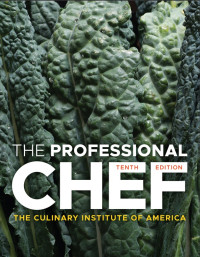
The Professional Chef
A sound and thorough education emphasizing the culinary fundamentals is the first step to becoming fluent in the trade. Aspiring professionals will find formal training at an accredited school an excellent beginning. Other training alternatives include taking part in special apprenticeship programs or self- directed courses of study. The process involves advancing from kitchen to kitchen by learning at the side of chefs who are involved in the day- to- day business of running a professional kitchen. The goal is to ensure a thorough understanding of basic and advanced culinary techniques, regardless of the type of training received.Creating a network of professional colleagues and industry contacts is important for future development. The avenue of growth that includes working with others, sharing information, and communicating regularly will help to keep your own work fresh and contemporary.An established network also makes it much easier for you to find a new position or qualified employees. Learning new skills to gain a competitive stance and encourage creativity should be an ongoing part of your career development. Beneficial and rewarding opportunities result from attending continuing education classes, workshops, and seminars.
Availability
Detail Information
- Series Title
-
-
- Call Number
-
641 Cul-p
- Publisher
- Hoboken, NJ : Wiley., 2024
- Collation
-
956 p.
- Language
-
English
- ISBN/ISSN
-
978- 1- 119- 49- 0951
- Classification
-
641
- Subject(s)
-
-
 Computer Science, Information & General Works
 Philosophy & Psychology
 Religion
 Social Sciences
 Language
 Pure Science
 Applied Sciences
 Art & Recreation
 All about Bali
 Literature
 History & Geography
 Academic Scientific